
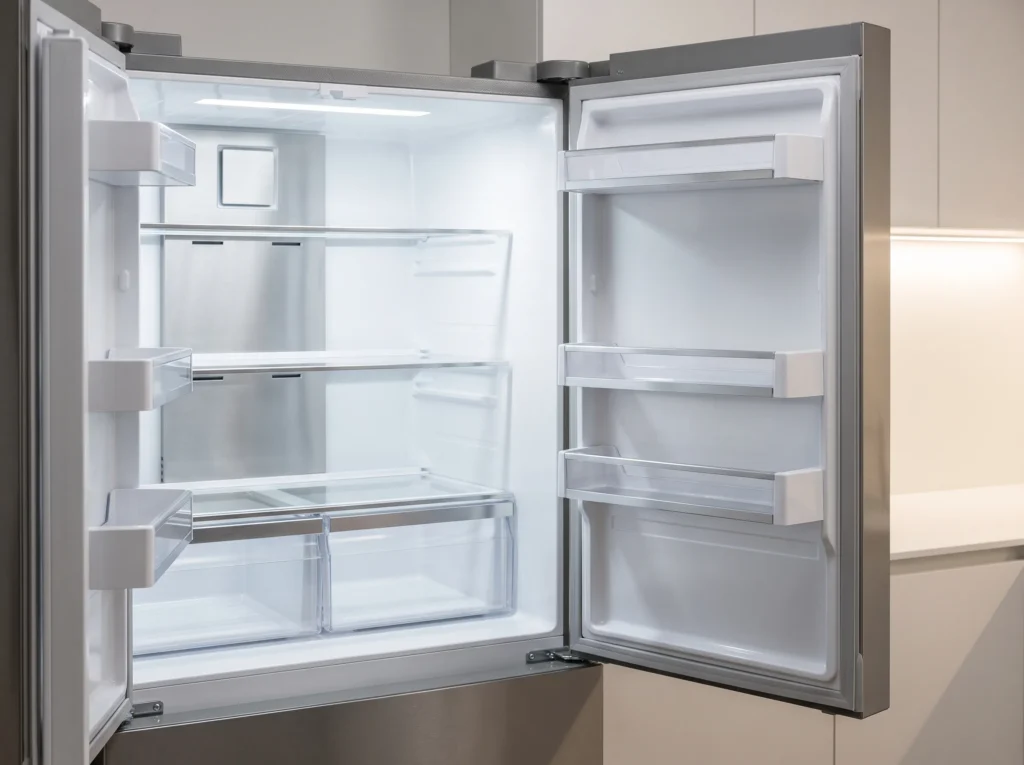
A fridge is one of the few things on moving day that actually needs a countdown before you touch it. Get the timing wrong – skip the defrost, or plug it back in the moment it arrives – and you can end up with a puddle on the new kitchen floor, a fridge that won’t cool properly, or in worse cases, damage to the compressor that costs far more than the inconvenience of planning ahead.
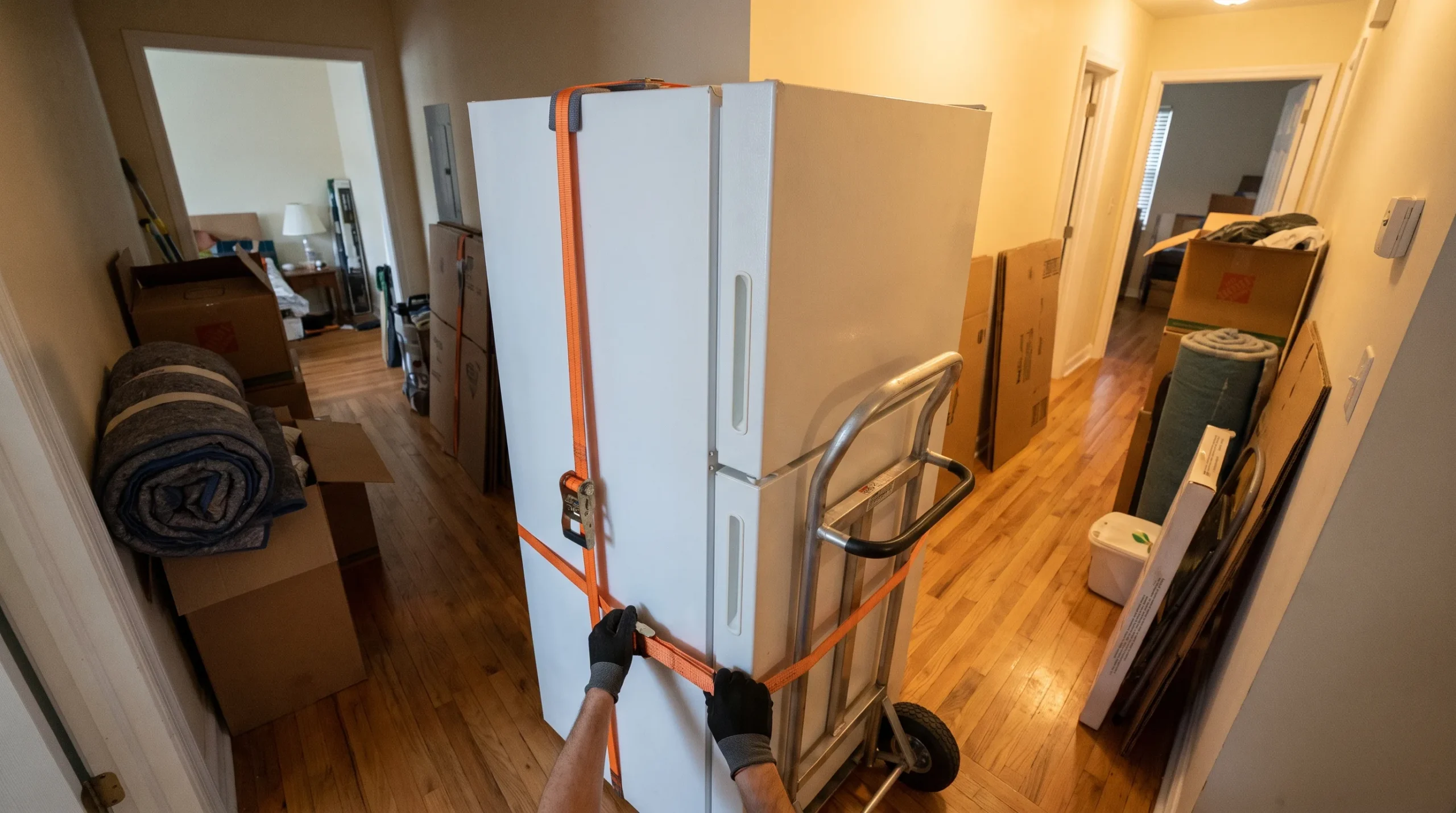
The good news: getting it right just means following a sequence, not doing anything technically difficult.
Start the defrost at least 24 hours out
Switch your fridge off and start defrosting it a full day before moving day – longer if the freezer has any real ice build-up. Prop the doors open once it’s off so air can circulate and speed up the process.
Skipping this step is the single most common fridge-moving mistake. A fridge that’s still cold and full of half-melted ice when it goes on the truck is a fridge that’s going to leak somewhere along the way.
Empty it completely – food, shelves, and drawers
Eat down your perishables in the days before the move, or transport what’s left in a cooler bag or esky separately from the fridge itself. Take out every shelf, drawer, and door bin and wrap them individually.
Let it dry out before it’s sealed up for transport
Once defrosted and emptied, leave the doors open for a few hours (or overnight) so the interior dries completely. A damp interior sealed shut for a few hours in a truck can develop a musty smell.
Keep it upright during the move
Fridges are built to run upright, and most have compressor oil that can migrate into the cooling lines if the unit is tipped on its side. If your fridge absolutely has to be laid down briefly, keep that as short as possible.
Wait before plugging it back in
If the fridge was tilted at any point during the move, let it stand upright for several hours – ideally overnight – before switching it on. Starting the compressor too early with oil in the wrong spot is how fridges get damaged in ways that aren’t obvious until weeks later.
| Step | Timing |
|---|---|
| Defrost and switch off | At least 24 hours before moving day |
| Empty food, shelves, drawers | Same time as defrosting |
| Leave doors open to dry | Overnight or several hours |
| Move upright wherever possible | On moving day |
| Let it stand before plugging in | Several hours to overnight after arrival |
A fridge is just one line on the full moving checklist – worth ticking off early since it’s the one item on the list that can’t be rushed at the last minute.
Frequently asked questions
How long before moving day should I defrost my fridge?
Defrost and switch off your fridge at least 24 hours before moving day – longer if it has heavy ice build-up in the freezer. This gives condensation time to evaporate and the compressor oil time to settle.
Why does the fridge need to sit upright for a while after the move?
If a fridge is tilted or laid on its side during transport, compressor oil can shift into the cooling lines. Standing it upright for a few hours before switching it back on lets the oil settle back where it belongs.
Should I empty the fridge completely before moving day?
Yes – eat down or transport perishables separately in an esky, and remove all food, shelves, and drawers. Loose shelves and drawers should travel wrapped separately.
Can a fridge be moved lying down?
It’s best avoided. Most fridges are designed to travel upright. If it absolutely has to be laid down for a short period, keep it as brief as possible and always let it stand upright for several hours before switching it on again.
Does Move Masters Removalists handle fridges as a heavy or fragile item?
Fridges are treated as a large, awkward item requiring careful handling and, where needed, an extra pair of hands – get in touch with your fridge’s size and any stairs involved and we’ll quote accordingly.
If packing and prepping appliances isn’t how you want to spend the days before your move, our packing and unpacking service can take care of the whole kitchen, fridge included. Get a quote and we’ll handle the timing for you.