
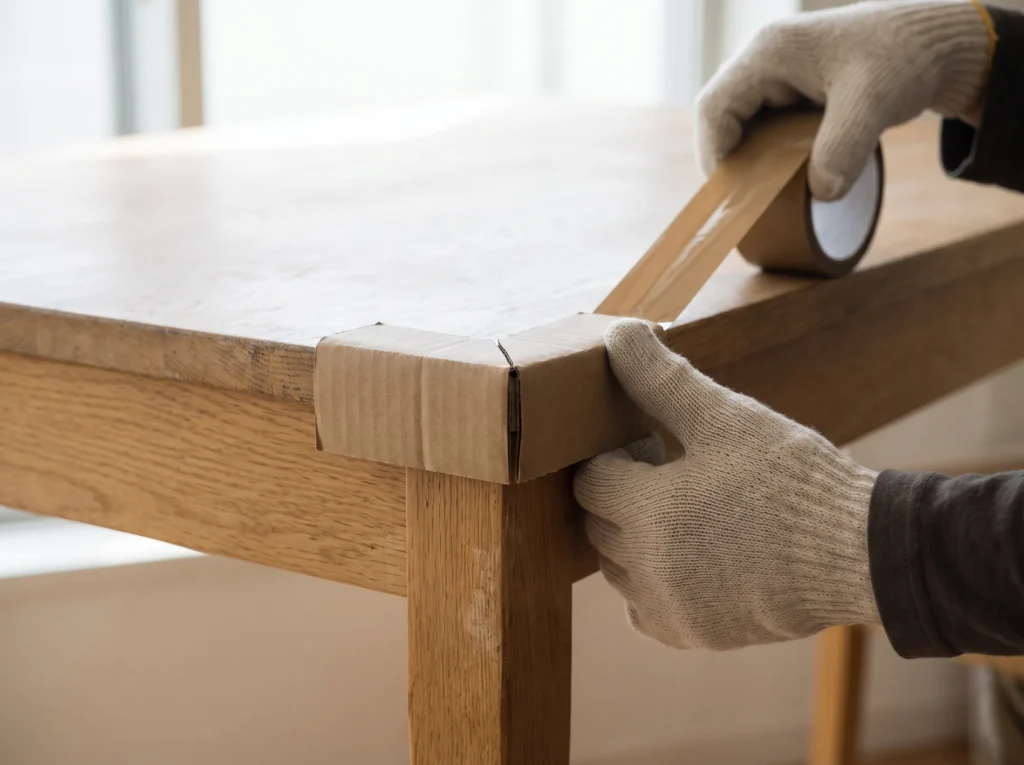
If you’ve ever moved house and ended up with a scuffed wall, a dented doorframe, or a chipped bit of veneer on a favourite dresser, there’s a good chance a corner was involved. Corners are where the damage happens – they’re the first point of contact when a piece of furniture swings wide in a hallway, brushes a doorframe, or gets set down slightly wrong in the truck. Flat surfaces are relatively easy to protect with a blanket draped over them. Corners need a bit more thought.
Why corners are the weak point
A moving blanket does a good job covering a flat panel or a tabletop, but it tends to sit loosely around a corner unless it’s specifically folded and secured there. That looseness is exactly where damage gets in.
Corners also take the brunt of impact simply because of geometry. When furniture gets bumped, it’s almost always a corner or an edge that makes contact first, concentrating the force onto a small point instead of spreading it across a flat surface.
The three ways to pad a corner properly
Folded cardboard corner guards. Cut a piece of cardboard, fold it around the corner at a right angle, and tape it in place. This works well for table and desk corners.
Foam corner protectors. Pre-made foam guards slip directly over a corner and stay in place with light pressure or a wrap of tape.
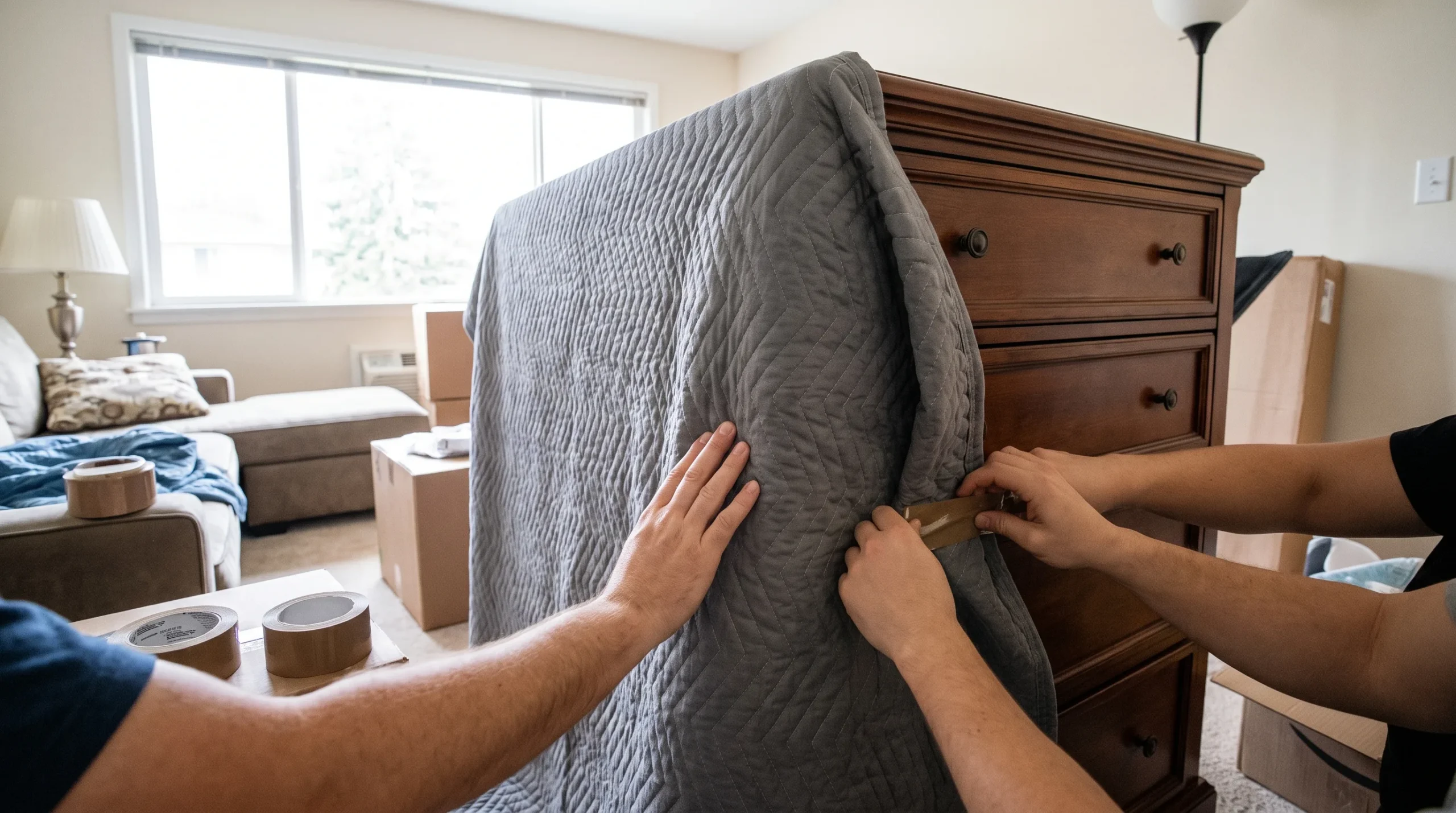
A doubled-over moving blanket. For larger pieces – wardrobes, bookcases, dressers – fold the blanket so there’s extra thickness right at each corner, then secure it with tape or plastic stretch wrap.
Never tape directly onto the furniture
Tape can lift paint, varnish, or veneer when it’s removed. Always wrap the item first (blanket, paper, or bubble wrap), then tape over the wrapping. The tape should never touch the actual furniture surface.
Protect the doorframes and walls too, not just the furniture
A well-padded piece of furniture can still take a chunk out of a wall or doorframe if there’s no protection on the fixed surfaces either. A few strips of cardboard taped to doorframe edges can save a repaint down the track.
Where this matters most
Corner damage tends to cluster around a few predictable spots: stairwells, tight apartment hallways, and the truck loading ramp itself. If your move involves any of these, spend the extra ten minutes on corner protection before the day.
Getting your books packed is one part of the puzzle – protecting the furniture itself is the other, and it’s the part most DIY movers skip.
Frequently asked questions
What should I use to protect furniture corners during a move?
Moving blankets are the standard for flat surfaces and edges, but corners specifically need extra padding – either folded cardboard, foam corner guards, or a doubled-over section of blanket, held in place with tape or stretch wrap.
Why do furniture corners get damaged more than other parts?
Corners take the impact first when furniture bumps a doorframe, wall, or another piece of furniture in the truck. They’re also the hardest part of a piece to pad evenly.
Do I need to protect corners even if I’m not using a truck myself?
Yes. Corners get knocked in hallways, stairwells, and doorways just as easily as in transport – often more so, since tight turns and narrow doorways are where most bumps happen.
Can I use tape directly on wood furniture?
Avoid taping directly onto painted or polished wood surfaces, as tape can pull off finish when removed. Wrap the item in a blanket or paper first, then tape over the wrapping, not the furniture itself.
What happens if furniture gets damaged during a Move Masters Removalists move?
We take pre-move condition photos and handle every item with care as standard practice. If anything is ever in question, we review it individually and work toward a fair resolution.
Careful furniture handling is built into every furniture removal we do – proper padding, corner protection, and pre-move condition checks as standard. Get a quote and let us handle the parts most likely to get bumped.