
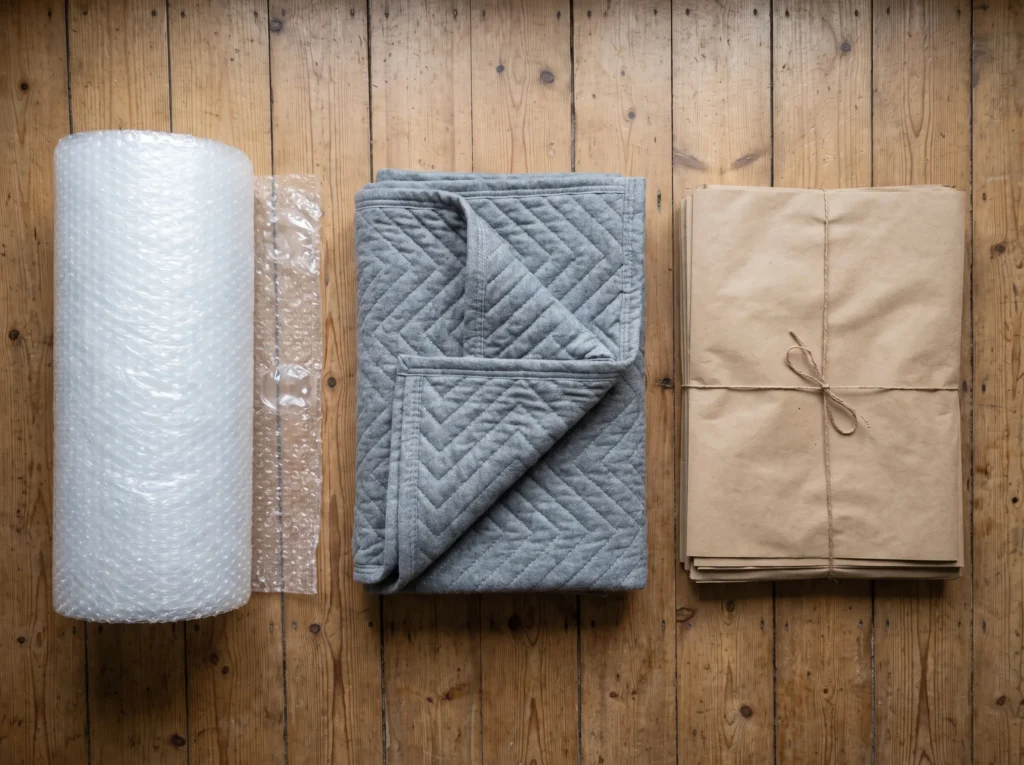
Walk into any hardware store’s moving aisle and you’ll find bubble wrap, moving blankets, and packing paper all sold as if they do the same job. They don’t. Each one solves a different kind of risk, and using the wrong one – or defaulting to whichever’s easiest to grab – is how fragile items end up damaged despite being “wrapped.”
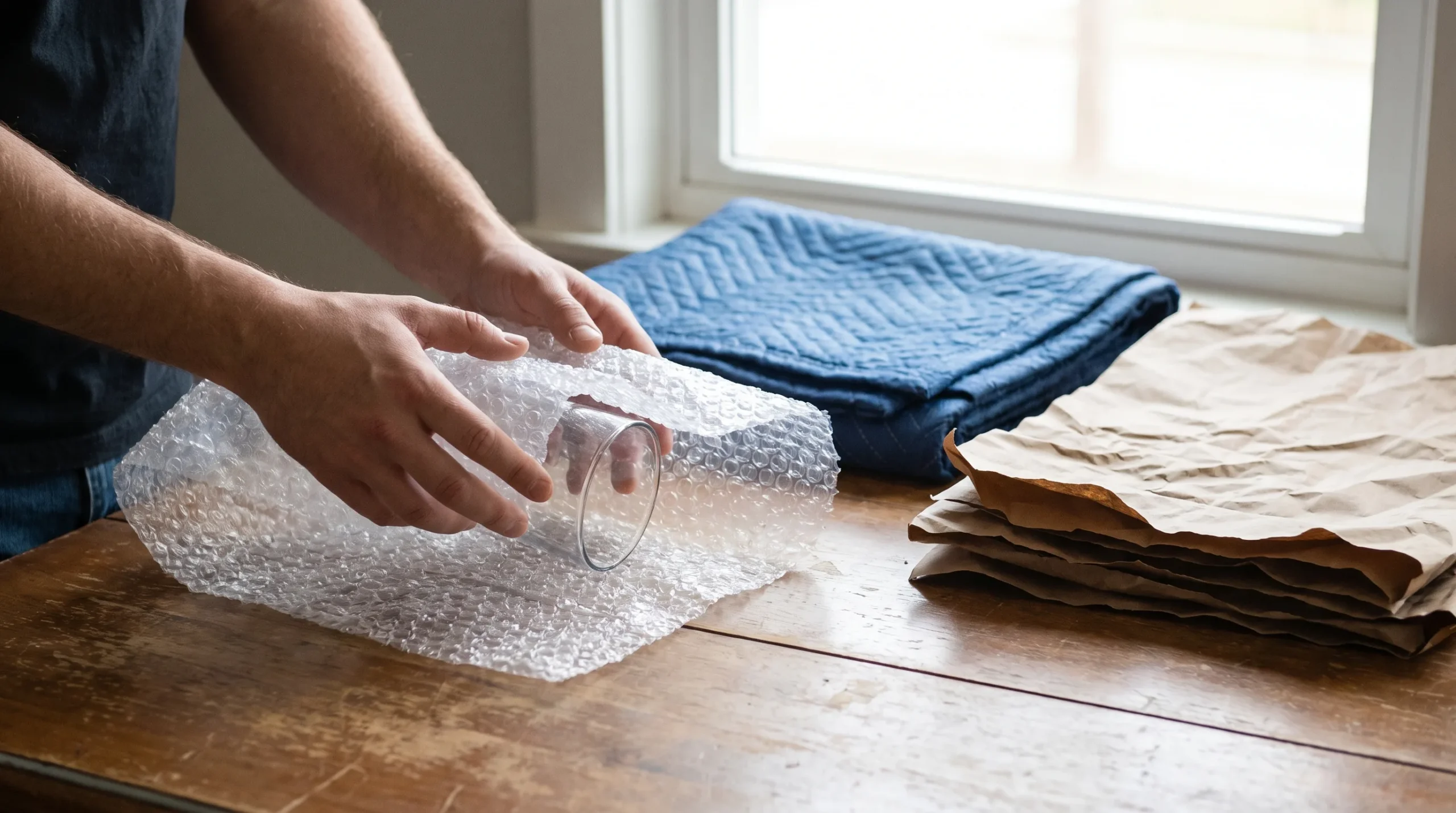
Here’s what each material is actually for, and where people commonly mix them up.
Bubble wrap: for impact protection
Bubble wrap’s job is absorbing a knock. The air pockets compress on impact and spring back, which is exactly what you want around anything that could crack, chip, or shatter if it’s bumped – glassware, ceramics, electronics, ornaments, picture glass.
It’s not designed for scratch protection on its own, and it’s overkill for anything that isn’t actually fragile.
Packing paper: for scratch and scuff protection
Plain packing paper (not newspaper – the ink transfers) is for surfaces that could scratch or scuff against each other, not for cushioning against a hard knock. It’s the right choice for wrapping individual plates, glasses, and everyday crockery, and for filling gaps inside boxes.
Moving blankets: for large surfaces and broad coverage
Blankets exist for a different scale of problem entirely – protecting large flat or bulky surfaces (furniture panels, mirror backs, appliance sides, TV screens) from scuffs, scrapes, and minor knocks during handling and transport.
If you’re wondering where corner protection fits into this, it’s usually a blanket doubled over at the corner, sometimes reinforced with cardboard – worth reading alongside our guide on protecting furniture corners if you’ve got anything with sharp edges.
A quick reference for what to use where
| Item | Best material |
|---|---|
| Plates, everyday crockery | Packing paper, wrapped and packed vertically |
| Glassware, stemware, crystal | Bubble wrap |
| Ornaments, ceramics, ornate items | Bubble wrap |
| Picture frames (glass) | Bubble wrap, or paper + cardboard corner protection |
| Furniture panels and surfaces | Moving blankets |
| Appliance exteriors | Moving blankets |
| Mirrors and TV screens | Moving blankets + cardboard edge protection |
| Gaps and void space in boxes | Packing paper (crumpled) |
The mistake worth avoiding: one material for everything
The most common packing error isn’t using too little protection – it’s using the wrong protection for the job. Bubble-wrapping a solid timber dresser panel achieves almost nothing a blanket wouldn’t do better and cheaper, while under-wrapping a set of wine glasses in a single layer of paper is how stemware ends up chipped.
Match the material to the actual risk: impact versus scratching versus broad coverage. It takes the same amount of time either way – the only difference is whether it works.
Frequently asked questions
What’s the difference between bubble wrap and packing paper?
Bubble wrap cushions against impact – it’s for items that could shatter or dent if knocked. Packing paper prevents scratching and scuffing between surfaces but doesn’t absorb much shock. They solve different problems, not the same one.
When should I use a moving blanket instead of bubble wrap?
Blankets are for large surfaces – furniture panels, appliance sides, mirror backs – where you need broad coverage against scuffs and scrapes rather than protection from a hard, sharp impact.
Can I use towels or clothing instead of buying packing paper?
For light-duty wrapping household linen works reasonably well and doubles up your packing. It’s not as consistent as proper packing paper for glassware though, since paper doesn’t have seams, zips, or buttons that can scratch a surface.
Do I need bubble wrap for everyday plates and glasses?
Packing paper is usually enough for everyday plates, wrapped individually and packed vertically like records. Save bubble wrap for genuinely fragile or valuable pieces – stemware, crystal, anything with thin glass or delicate detail.
What’s the biggest mistake people make with packing materials?
Using the same material for everything – usually over-relying on bubble wrap for jobs a blanket or paper would do better, while under-protecting genuinely fragile items because “it’s already wrapped in something.”
If sorting out the right material for every item in the house sounds like more time than you’ve got, our packing and unpacking service uses the right materials for each item as standard. Get a quote and skip the guesswork.