
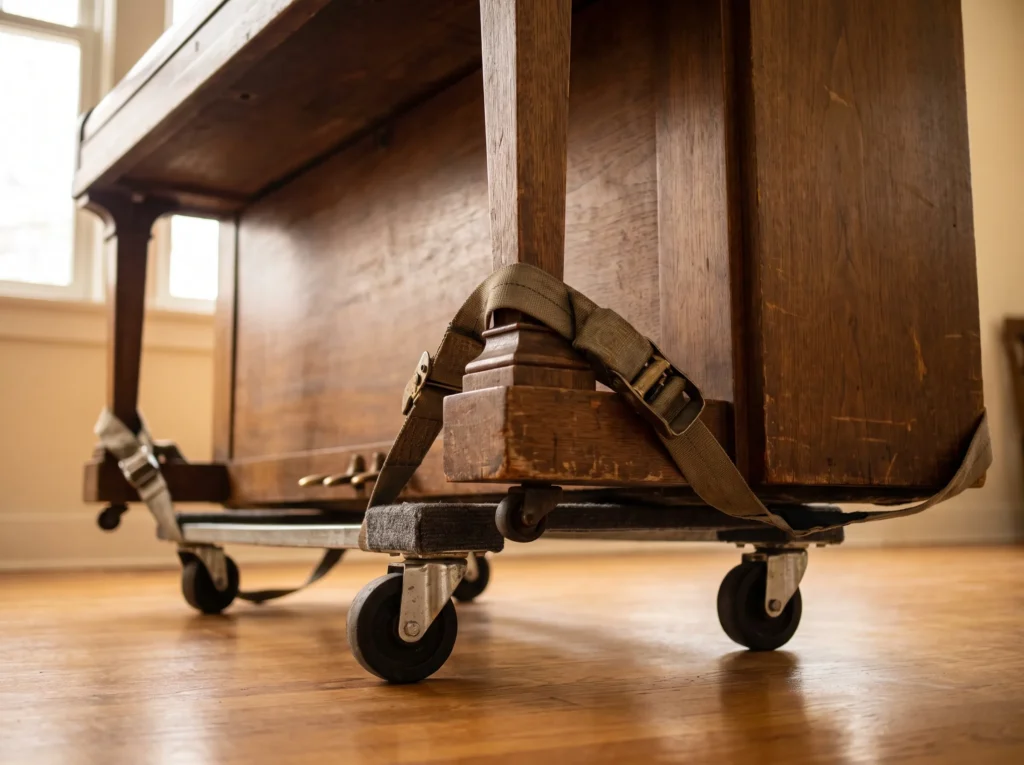
Every year, a predictable number of pianos get damaged – or a predictable number of people get hurt – because a piano move got treated like any other piece of heavy furniture. It gets planned the same way: grab a mate, borrow a ute, and muscle it out the front door the way you’d move a couch. Pianos punish that approach in ways couches don’t.
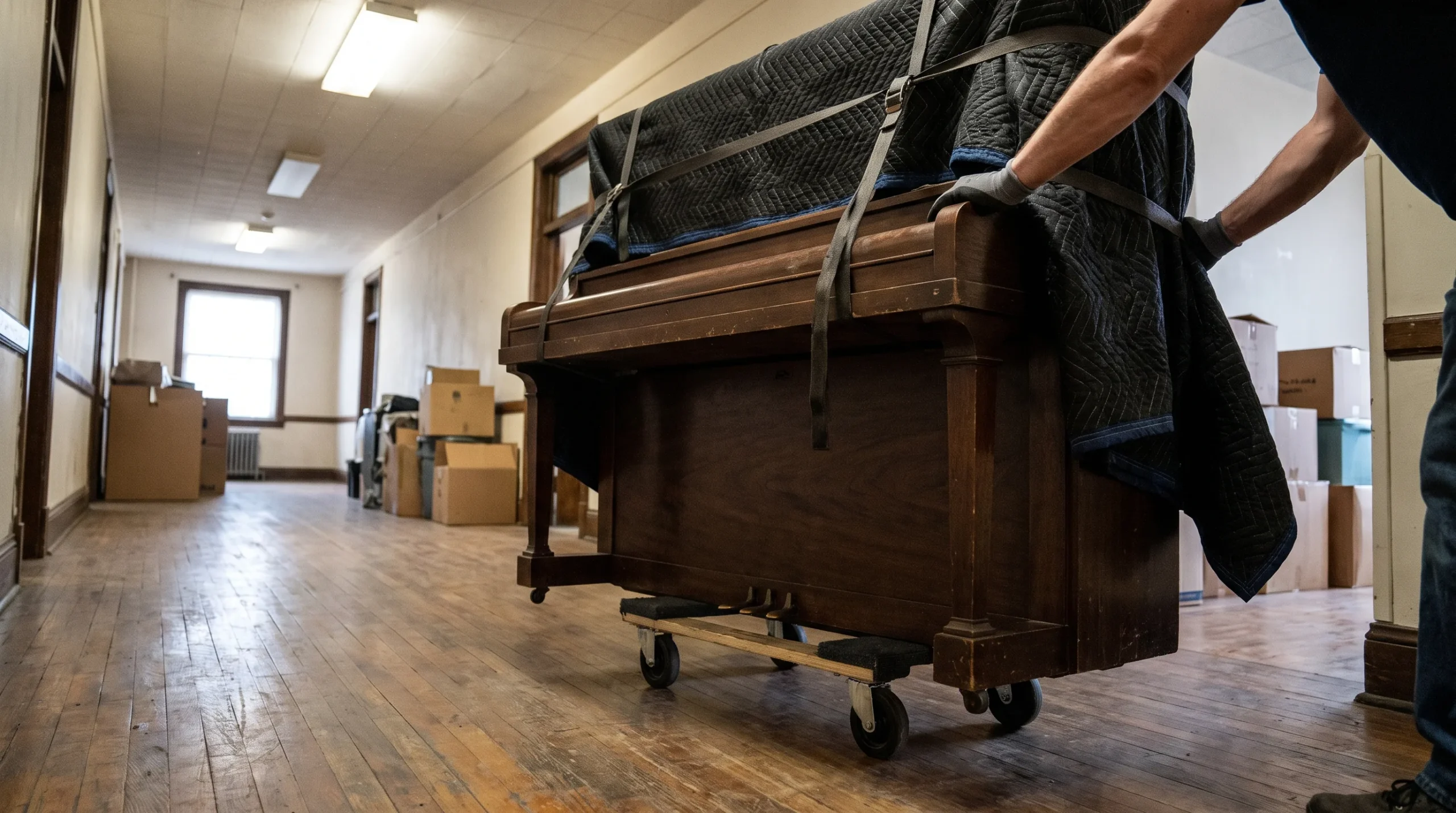
It’s not just the weight
An upright piano typically weighs somewhere between 200 and 300kg. A grand piano can weigh considerably more. That alone would make it a two-or-three-person job at minimum – but weight isn’t actually the hard part. Plenty of furniture weighs close to that and moves without drama.
The real problem is where the weight sits. A piano’s mass isn’t spread evenly across its footprint – it’s concentrated toward the back and bottom, around the cast iron frame and strings. That means a piano tips, shifts, and rolls in ways that don’t match how it looks from the outside.
The inside of a piano is genuinely delicate
Beneath the solid, heavy exterior, a piano is one of the most mechanically complex pieces of furniture most homes will ever contain – thousands of small moving parts that are sensitive to jolts, tilts, and temperature. A knock that wouldn’t leave a mark on a bookshelf can knock a piano out of tune, or in worse cases, damage the action mechanism.
This is why professional piano moving uses specific equipment rather than improvised straps and cushions: a piano dolly built for the weight distribution of an upright, or a piano board for a grand once the legs and lyre are removed, with the instrument secured flat and controlled the entire way.
Stairs change everything
A piano move that’s straightforward on a single level becomes a genuinely different job the moment stairs are involved. The piano needs to be tilted at controlled angles, walked step by step, with the weight managed by people who know exactly where the balance point is and how much force is needed to hold it there.
Grand pianos need to come apart first
A grand piano can’t simply be carried as one unit in most cases. The legs and the lyre (the pedal assembly) are removed, the lid is secured, and the body is lowered onto a padded piano board, strapped down, and moved flat before being reassembled at the destination.
What a proper piano move actually involves
- The right equipment for the piano type (dolly for upright, board for grand)
- Enough crew to control the weight and balance at every point, not just lift it
- A plan for stairs, doorways, and tight turns worked out before the piano moves an inch
- Careful handling of the piano’s finish, which scratches and dents easily under improvised straps
If you’re planning a piano move as part of a larger house move, it’s worth getting a quote for the piano specifically, since it’s usually handled as its own line item rather than folded into the general hourly rate – our piano removals service is built around exactly this kind of job.
Frequently asked questions
How much does it cost to move a piano in Sydney?
Piano moves are quoted based on the piano type (upright or grand), stairs at either end, and access at both properties. Because of the weight and care involved, a piano move typically needs a dedicated crew rather than being folded into a standard hourly rate – get in touch with your piano type and any stairs involved for an accurate quote.
Can two people move an upright piano themselves?
It’s not recommended. An upright piano typically weighs 200-300kg, and the weight isn’t evenly distributed – it’s heavily loaded toward the back and bottom. Two people attempting this risk serious injury and are highly likely to damage the piano, the floors, or both.
Why are pianos harder to move than similarly heavy furniture?
Weight alone isn’t the issue – it’s the combination of weight, awkward shape, an off-centre balance point, and genuinely delicate internal mechanics that can be knocked out of tune or damaged by a jolt that a wardrobe would shrug off.
Do grand pianos need different handling to upright pianos?
Yes. Grand pianos need to be partially disassembled (legs and lyre removed, lid secured) and moved on a specialised piano board, then re-assembled at the destination – a different process entirely to an upright, which moves on a piano dolly with the right straps.
What happens if my piano needs to go up or down stairs?
Stairs significantly change how a piano move is approached and priced, since the piano needs to be tilted and controlled at precise angles rather than simply carried. Always tell us about stairs at either end when you enquire, so the quote and crew reflect the actual job.
A piano deserves the same care whether it’s an upright that’s been in the family for years or a grand you’ve just bought. See our removalist costs guide for how pricing generally works, or get a quote for your piano specifically and we’ll take it from there.