
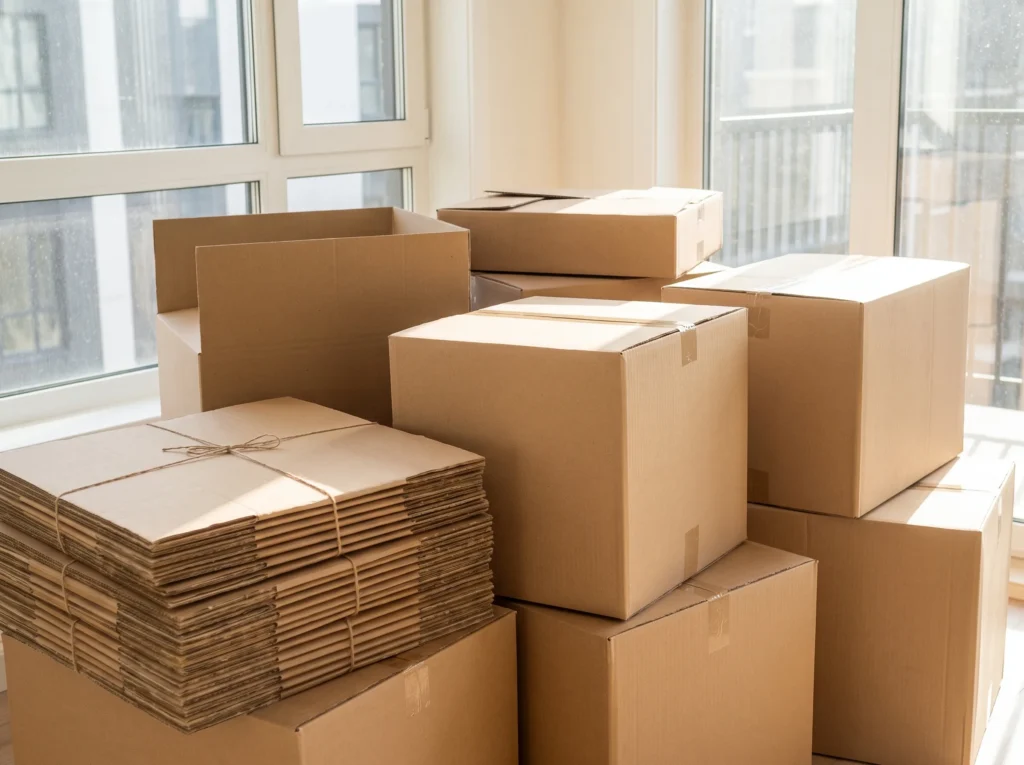
Buying too few boxes means a last-minute run to grab more mid-pack. Buying too many means paying for cardboard you’ll never use. Here’s a realistic range by home size to plan around.
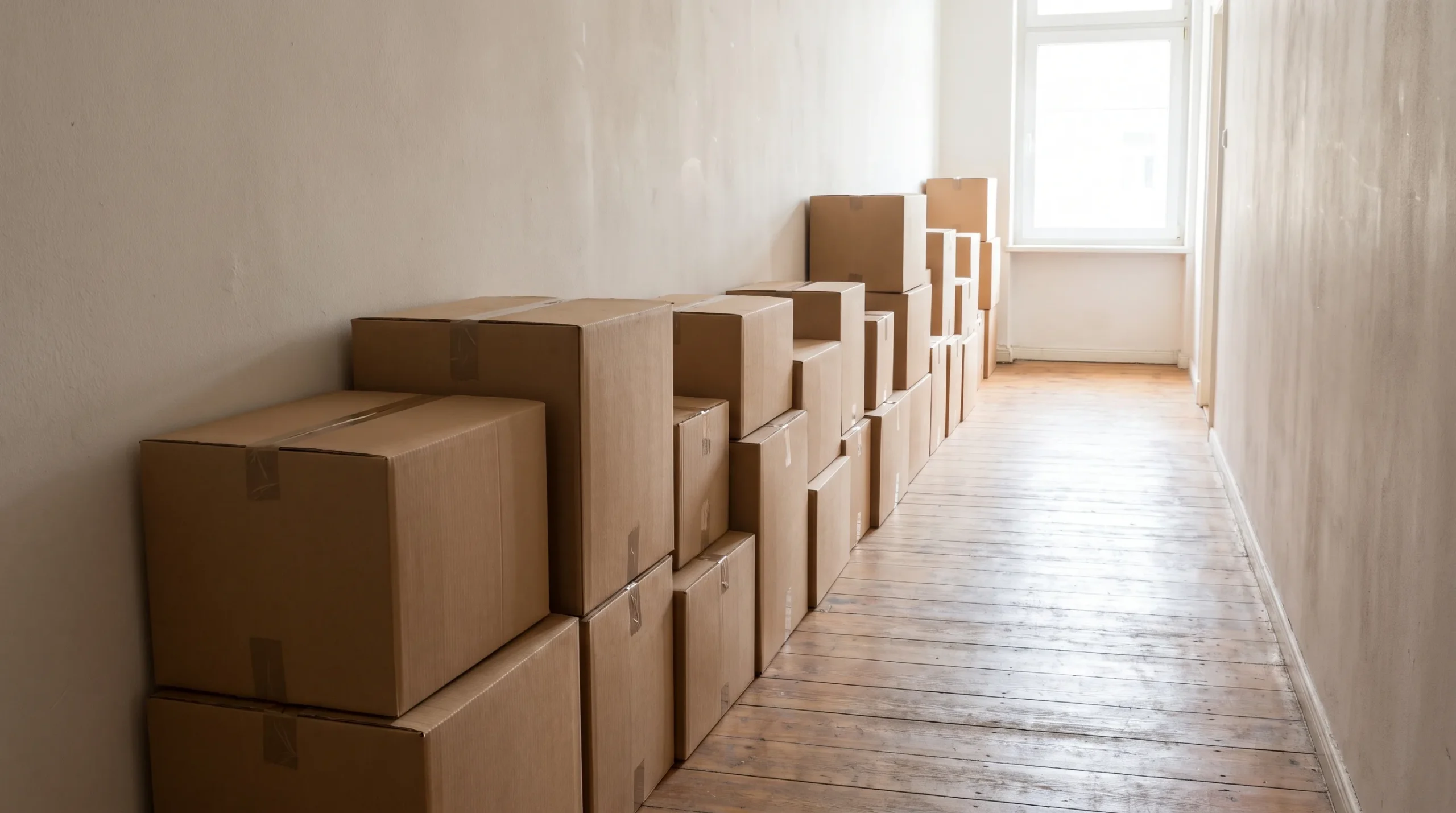
Rough guide by home size
- Studio or 1-bedroom apartment: roughly 15–20 boxes
- 2-bedroom apartment or unit: roughly 25–35 boxes
- 3-bedroom house: roughly 40–55 boxes
- 4+ bedroom house: roughly 60 or more boxes
These are starting points, not exact numbers — how long you’ve lived somewhere and how much you’ve accumulated matters more than the floor plan alone.
Box sizes matter more than box count
A flat total isn’t that useful without a size mix. As a rough split: small boxes for books and anything heavy, medium boxes for most general items, and large boxes for lighter, bulkier things like linen and pillows. Loading a large box with books makes it too heavy to lift safely.
What changes the number
- How long you’ve lived in the property — longer tenure usually means more accumulated stuff
- Whether you’ve decluttered first — see our moving checklist for the full lead-up timeline
- Kids’ rooms, which tend to need more boxes than their size suggests
- Garage, shed or storage areas, which are easy to underestimate
Better to have a few spare than run short
Running out of boxes mid-pack almost always means an inconvenient trip at the worst possible time. It’s worth having 10–15% more than your estimate on hand — unused flat-packed boxes cost you nothing but a bit of space.
Sourcing boxes
We supply packing materials as part of our packing service, sized and priced per unit, if you’d rather not source and manage your own. Ready to plan your move properly? Get a quote and we’ll help you work out what you’ll actually need.
Frequently asked questions
How many boxes does a 1-bedroom apartment need?
Roughly 15–20 boxes is a reasonable starting estimate, though this varies with how long you’ve lived there and how much you’ve accumulated.
How many boxes does a family home need?
A 3-bedroom house typically needs 40–55 boxes, and a larger 4+ bedroom home often needs 60 or more — garages and storage areas can push this higher.
Is it better to overestimate or underestimate?
Overestimate slightly. Running short mid-pack is more disruptive than having a few spare flat-packed boxes left over.
Do box sizes matter, or just the total count?
Sizes matter. Small boxes for heavy items like books, medium for general use, and large for lighter bulky items — an all-one-size approach usually leads to boxes that are either too heavy or wasted space.
What changes the number most?
How long you’ve lived in the property and whether you’ve decluttered beforehand. Garages, sheds and kids’ rooms are also commonly underestimated.