
The kitchen is the room most likely to arrive damaged — it’s where everything is breakable, heavy, or oddly shaped. It’s also the room professionals pack in a couple of hours using a handful of rules that never change. Here they are, in the order you should do them.
What you’ll need
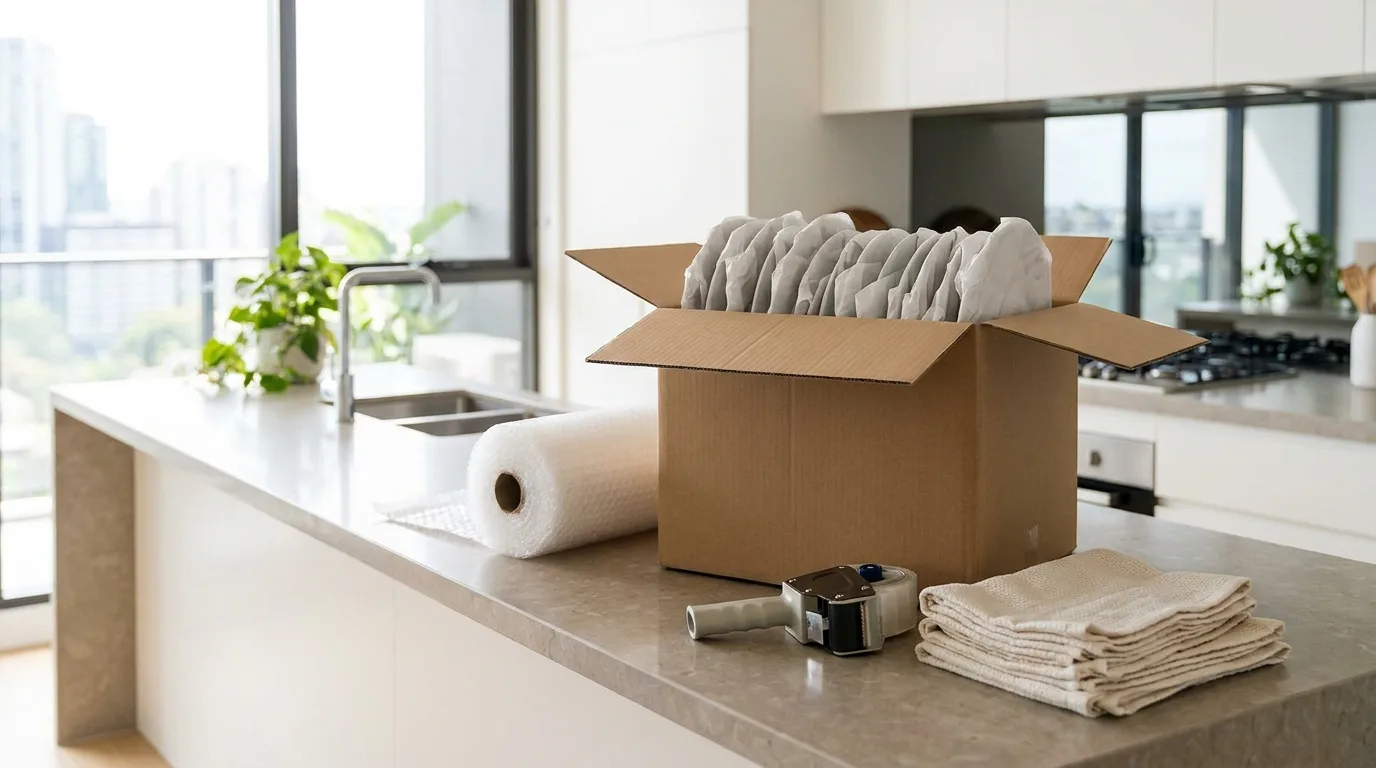
- Small heavy-duty boxes for anything ceramic or glass — big boxes full of plates fail.
- We sell packing boxes and materials per unit, delivered — including cell dividers for glassware.
- White packing paper — newspaper works but ink transfers onto everything.
- Bubble wrap for the genuinely fragile, tape, a marker, and your own tea towels as free padding.
Step 1: Declutter before you wrap anything
Every kitchen has a shelf of things that haven’t been used since the last move. Chipped mugs, duplicate utensils, the sandwich press — sell, donate, or bin them now. Every box you don’t pack is money saved on moving day.
Step 2: Set up a packing station
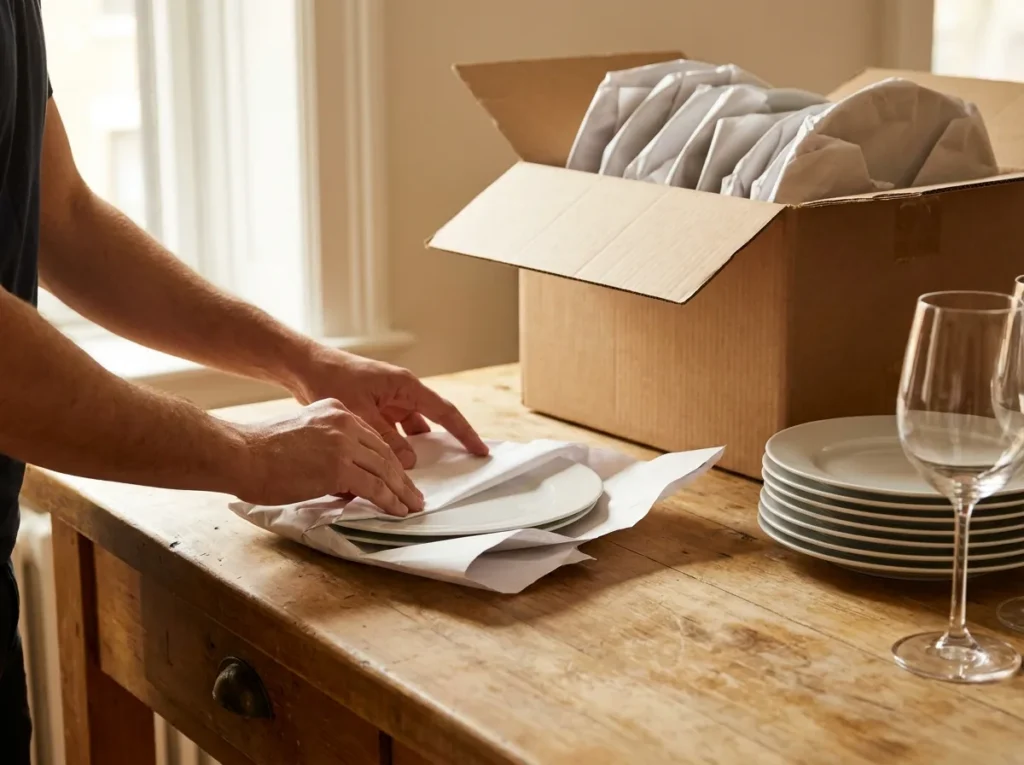
Clear the bench. Paper stack on one side, open box on the other, tape and marker within reach. Packing a kitchen standing at a bench takes half the time of packing hunched over the floor.
Step 3: Plates go vertical — always
This is the rule that saves the most breakage. Wrap each plate in paper, then stand them ON EDGE in the box, like records in a crate. A flat stack concentrates the whole stack’s weight on the bottom plate every time the truck brakes; vertical plates flex and survive. Fill every gap with scrunched paper until nothing moves when you shake the box.
Step 4: Glasses and stemware
Use a box with cardboard cell dividers. Stuff each glass with scrunched paper before wrapping it — the inside support matters as much as the outside. Heaviest glasses on the bottom row, stemware on top, and label the box FRAGILE — THIS WAY UP on the side, not the lid.
Step 5: Knives and sharp things
Roll knives in a tea towel with all blades facing the same direction, secure with a rubber band, and label it KNIVES so nobody reaches in blind. Never loose in a box — for the sake of whoever unpacks.
Step 6: Small appliances
Original boxes are gold if you kept them. If not: tape the cord to the appliance body, wrap in a towel, and pack upright in a snug box. Kettle, toaster and coffee machine go in LAST — they’re the first things you’ll want at the other end.
Step 7: Pantry, liquids and the fridge
Bin open packets — they’re not worth transporting. Tape the lids of oils and sauces and bag them; one leaked bottle ruins a whole box. Defrost the fridge 24–48 hours before the move with towels down, and use the weeks before to eat down the freezer.
Step 8: Pack the open-first kitchen box
Kettle, two mugs, tea or coffee, a sponge, dish soap, cutlery for day one, and snacks. Label it OPEN FIRST and carry it in your own car — never in the truck, where it will end up buried behind the couch.
Or skip all of it
A professional crew packs the average kitchen in two to three hours, wrapped to survive the truck — it’s the room our packing and unpacking service gets booked for most. If you’re pricing up the whole move, our Sydney removalist cost guide shows exactly what to budget. Moving out of an apartment? The kitchen rules are the same, but check our apartment moving guide for the strata side.
Frequently asked questions
What is the best way to pack plates for moving?
Wrap each plate in packing paper and stand them vertically on edge in a small, strong box — never in flat stacks. Fill all gaps with scrunched paper so nothing shifts in transit.
Should glasses be packed up or down?
Rims up, stuffed with paper inside and wrapped outside, ideally in a box with cell dividers. Heaviest glasses on the bottom, stemware on top.
How long does it take to pack a kitchen?
A full kitchen takes most people 4–6 hours doing it properly. A professional two-person crew does it in 2–3.
What should I not pack when moving?
Open food packets, flammables (gas bottles, solvents), and anything leaky without taped lids and a sealed bag. Your removalist can give you the full restricted list at booking.
Do removalists pack kitchens?
Yes — kitchen packing is the most-requested part of our packing service, with materials included.
Rather spend moving week doing anything else? Get a free quote — two minutes, a real person answers, and the price quoted is the price you pay.