
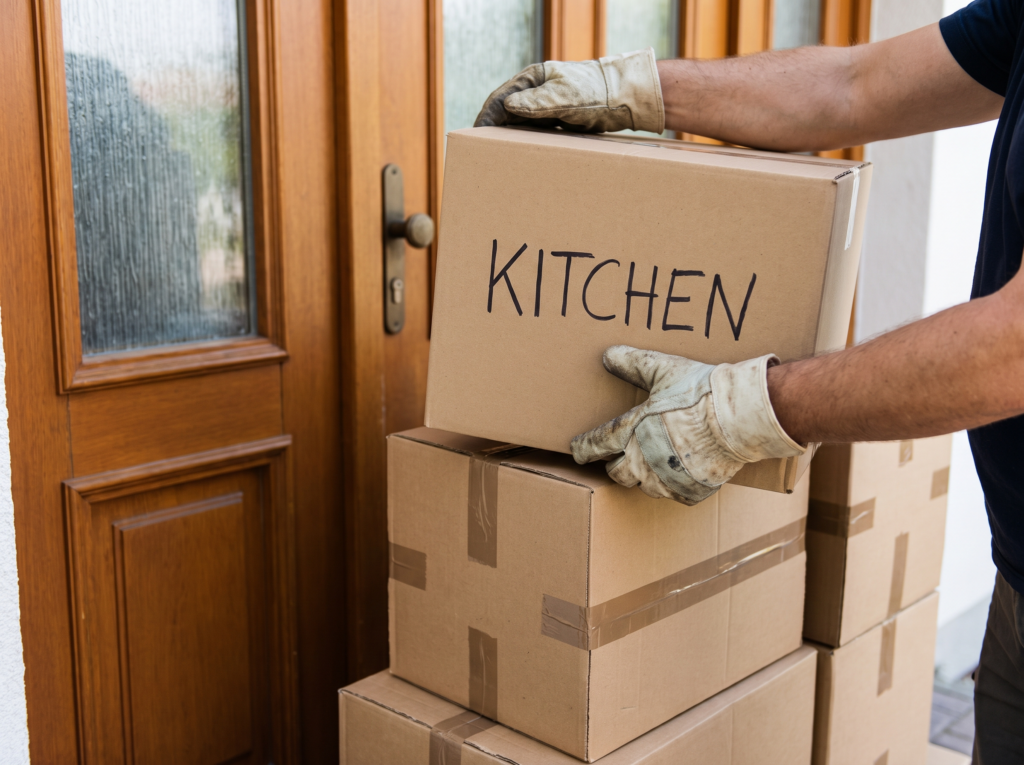
Moving day always feels like it should go smoothly if the packing’s done and the truck’s booked. Then it’s 8am, the crew is due any minute, and something small throws the whole morning off — a car parked in the loading spot, a lift that isn’t booked, a bed frame that still needs to come apart. None of these are big problems on their own. But they all share one thing in common: they cost time, and time is usually what your move is billed on. Here’s the single most common oversight, plus the few others worth checking off before the truck pulls up.

The big one: nobody held the access path clear
Across the moving industry, this is consistently the most cited moving-day mistake — not forgetting to pack something, but forgetting to prepare the space the truck and crew actually need to work in. In Sydney, that usually means one of a few things: a car left in the driveway or the closest street parking spot, bins not moved off the footpath on collection day, a narrow terrace lane that only allows access from one direction, or a loading zone that fills up fast on a weekday morning.
If the truck can’t park close to your door, the crew has to carry everything further — sometimes down a street, around a corner, or up a driveway that wasn’t cleared. That’s extra trips, extra time, and in inner Sydney suburbs with narrow streets or strata car parks, it can turn a simple two-hour job into a much longer one. The fix costs nothing: before your move date, check what parking is available directly outside your pickup and drop-off addresses, ask a neighbour to hold a spot if needed, and let your removalist know in advance if access is going to be tight (a narrow lane, a steep driveway, no truck access at all) so they can plan for it rather than discover it on the day.
Apartment or strata building? Confirm the lift booking
If you’re moving out of — or into — a building with a lift, don’t assume you can just turn up and use it. Many Sydney apartment buildings require lifts to be booked in advance for moves, sometimes through the strata manager or building manager, and sometimes with several days’ notice. Some buildings also restrict move times to certain hours, require a certificate of currency for insurance, or ask for a refundable bond against damage to common property.
Skipping this step is one of the fastest ways to lose a chunk of your moving day. If the lift isn’t booked, you could be waiting for a slot, competing with other residents doing their daily commute, or told you can’t move at all until the booking is sorted. Contact building management as early as you can once your date is locked in — ideally when you first read our guide on booking a lift for moving day, well before the week of your move.
Large furniture that still needs disassembling
Bed frames, wardrobes, dining tables, and flat-pack furniture often need to be partly taken apart to move safely through doorways, stairwells, or lifts. If disassembly isn’t part of your booked service, that furniture needs to be broken down before the crew arrives — otherwise it becomes something the crew has to work through on-site, which adds time to a job that’s billed per half hour.
The simplest approach: check your quote to see whether furniture assembly and disassembly is included. If it’s not, and you’re comfortable doing it yourself, get bed frames and wardrobes apart the night before, group the hardware (screws, bolts, brackets) into a labelled bag taped to the item itself, and keep any tools you’ll need for reassembly in an accessible spot at the new place — not buried in a box somewhere in the truck.
No first-night box, so everything gets buried
This one doesn’t slow the move down, but it makes the evening after much harder than it needs to be. When every box goes straight into the truck without separating out the essentials, you can end up unpacking half your kitchen at 9pm just to find a phone charger. A first-night box — packed last, loaded last, unpacked first — solves this. It’s worth taking ten minutes to pack a proper first-night box before moving day rather than improvising once you’re standing in an empty apartment surrounded by identical boxes.
Boxes with no labels, and no room destination
Even with everything else sorted, unlabelled boxes slow down the unload. A crew that doesn’t know which room a box belongs to will either ask you constantly or make a reasonable guess — and reasonable guesses mean boxes in the wrong rooms and more re-shuffling later. Labelling by room (not just by contents) and flagging anything genuinely fragile means boxes go where they’re meant to the first time, and delicate items get handled the way they need to be.
Frequently asked questions
What’s the most common thing people forget before their move?
Clearing and holding a parking space close to the entrance for the truck. Without it, the crew can end up parked down the street or around the corner, which turns a straightforward job into a longer carry with more trips and more time on the clock.
Do I need to book the lift if I live in an apartment?
If your building has a lift, check with your strata manager or building manager whether it needs to be booked for moving day. Many Sydney apartment buildings require this, sometimes with a few days’ notice, and turning up without a booking can mean losing your slot entirely.
Should I take furniture apart myself before the movers get there?
Only if you’re not using a disassembly service — check what’s included in your quote first. If large items like bed frames or wardrobes need to come apart and no one has arranged it, that time still has to happen on the day, just later than planned.
What should go in a first-night or essentials box?
Pack a box with anything you’ll want within the first few hours at the new place — phone chargers, toiletries, medications, a change of clothes, basic tools, and any paperwork you need on hand. Keep it separate from the general boxes so it doesn’t end up buried in the truck.
Does forgetting these things actually cost more money?
It can. Most local moves are billed by the hour, so anything that adds time on the day — searching for parking, waiting on a lift booking, disassembling furniture that wasn’t ready — extends the job. Sorting these details beforehand is the simplest way to keep your move on schedule.
A little preparation on these five points goes a long way toward keeping your moving day on time and on budget. If you want a clear, fixed half-hourly rate and a team that tells you exactly what to sort out in advance, get a fixed quote from Move Masters Removalists, or message us on WhatsApp at 0435 234 720 and we’ll walk you through exactly what to prepare before your truck arrives. And for the two weeks beforehand, our 48 hours before your move checklist covers everything else worth ticking off.