
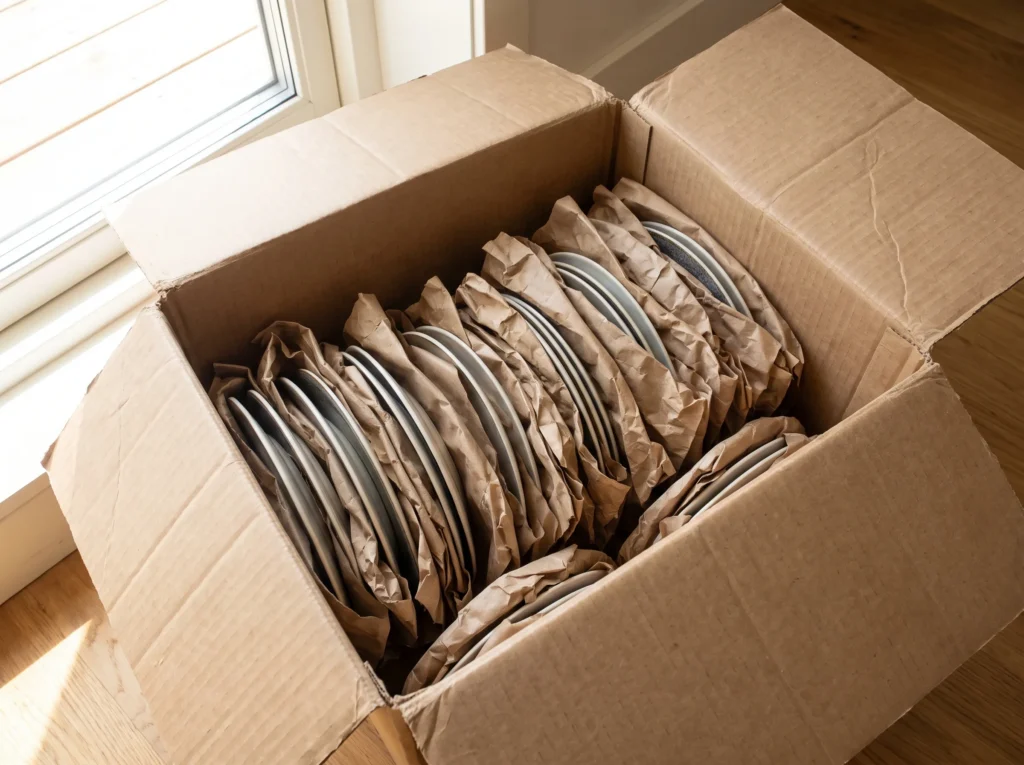
Plates are one of the most commonly broken items in a move, and it’s almost always down to how they’re packed rather than how they’re handled. The fix is simple once you know the method.
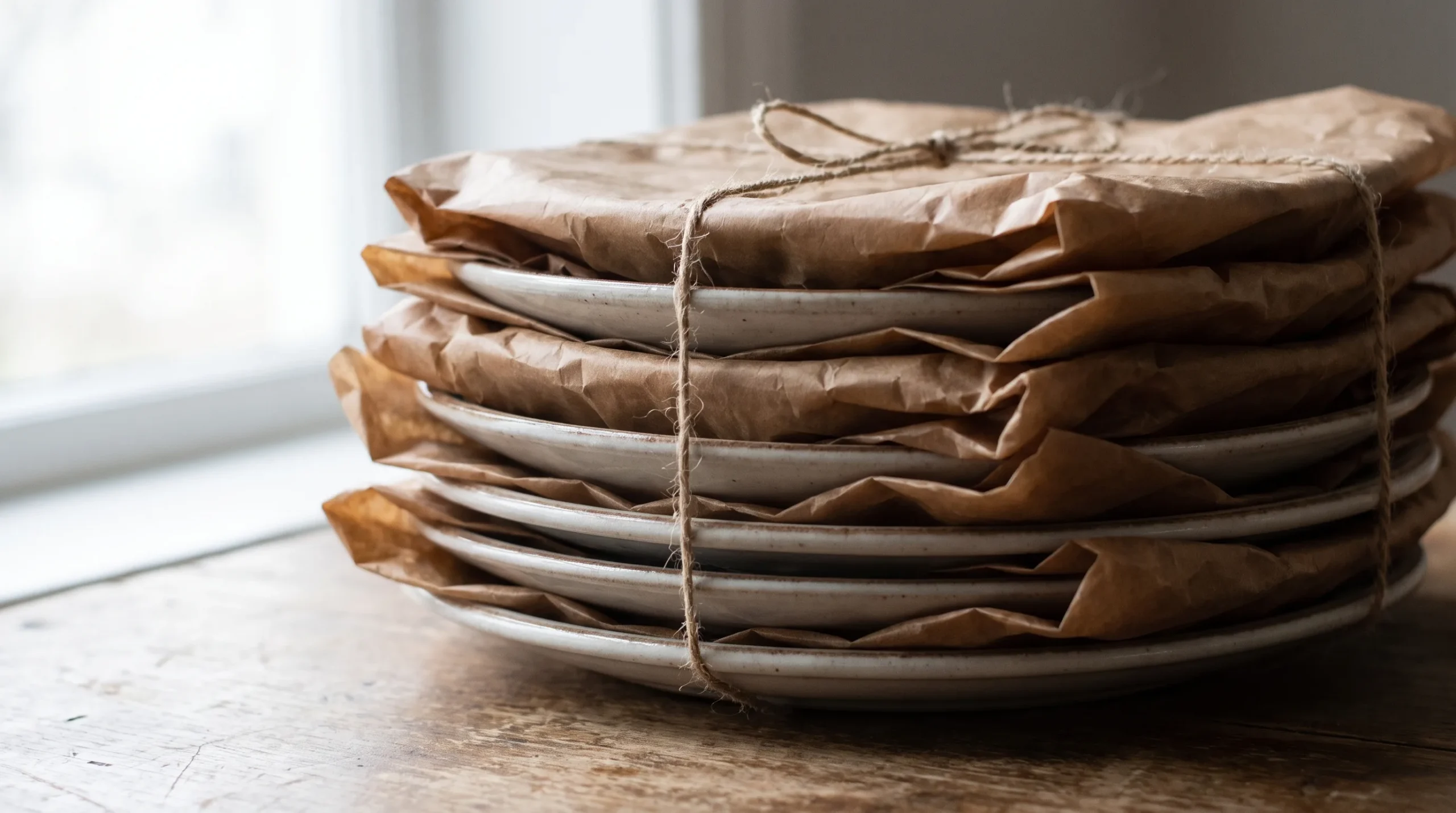
The mistake most people make
Stacking plates flat, the way they sit in a cupboard, is the single biggest cause of breakage. Flat-stacked plates concentrate pressure across the middle of each plate, and any bump or shift in the truck can crack them straight through.
The method that works: pack on their edge
Plates are far stronger on their edge than lying flat — it’s the same reason a book stands up better on its spine than flat under weight. Packing them vertically, like records in a crate, spreads pressure around the rim instead of the centre.
Step by step
Wrap each plate individually in packing paper, then stand them on their edge in the box, packed snugly enough that they can’t tip over into a flat stack during transit. Fill any remaining gaps with crumpled paper so nothing can shift.
Box choice matters
Use a small or medium box, never a large one. A large box full of plates is often too heavy to lift safely, and the extra space makes it easier for the contents to shift around.
Cushioning that actually protects
Plain packing paper works well and is easy to source in bulk. Bubble wrap offers more cushioning for good china, but adds bulk. Towels can work in a pinch but don’t wrap as tightly or consistently as paper.
More kitchen packing
Plates are just one part of a much bigger job — see our full guide to packing the rest of your kitchen for everything else that needs a similar level of care. Once packed, label it as fragile clearly on the top and sides so it’s handled accordingly. Ready to book your move? Get a quote and we’ll take it from there.
Frequently asked questions
Why do plates break so often when moving?
Mostly because they’re stacked flat, the same way they sit in a cupboard. Flat stacking concentrates pressure across the plate’s centre, which is where cracks usually start.
What’s the right way to pack plates?
Wrap each one individually in paper and pack them standing on their edge, not flat — this spreads pressure around the rim instead of the centre and is much stronger.
What should I use to cushion plates?
Plain packing paper is the standard choice and works well. Bubble wrap adds more protection for valuable china but takes up more space in the box.
What size box should plates go in?
Small or medium — never large. A large box of plates is often too heavy to lift safely and gives the contents more room to shift.
Should I pack plates flat or on their edge?
On their edge. It’s counterintuitive since that’s not how they sit in a cupboard, but it’s significantly stronger and is the method professional packers use.